Police Commissioner General. Dr. Boy Rafli Amar Becomes Speaker at Stadium General "Early Detection of Modes of Development of Radicalist Movements"
Jatinangor (04/07/2022) – The potential threat of terrorism in Indonesia ranks 24th out of 162 countries according to the 2022 Global Terrorism Index (GTI). This was conveyed by the Head of the National Counterterrorism Agency (BNPT), Komjen Pol. Dr. Boy Rafli Amar, M.H while filling the general stadium at the IPDN Jatinangor Campus. Boy Rafli raised the theme "Early Detection of the Mode of Development of the Radicalist Movement" to be conveyed to all IPDN praja and academic community both offline and online. Boy Rafli clearly explained to the praja regarding global and regional developments in terror, including developments in domestic terror such as the development of the East Indonesian Mujahideen groups, the Indonesian Islamic State, Papuan Terrorist Separatists, Jamaah Ansharul Khilafah and so on.
"Releases from the United Nation during the pandemic saw an increase in radicalization on social media. Including in Indonesia, 202 million people use the internet and 80% of them have social media accounts. Of the 80% of social media account owners, 60% are young people, who are the targets of global terrorist network groups. Where these terrorists are spreading hateful narratives against the government," he said. According to Boy, inequality in public services and services by the state or government is the entry point for the development of a spirit of hostility towards the state. "This terrorist network has a political aim to delegitimize supra-political forces in their respective governments and hopes to exist in that country," he said again. Boy also reiterated that IPDN officers should be careful about preaching or studies that are disguised as religion, but which include the teachings of radicalism or terrorism. "Future leadership candidates must really be able to differentiate between what is religious preaching and what is really a plan full of violence," he said. Boy explained, "If violence is permitted, it means it does not refer to any religion, because all religions do not allow violence, while this terrorist group uses religion for political interests to gain power.
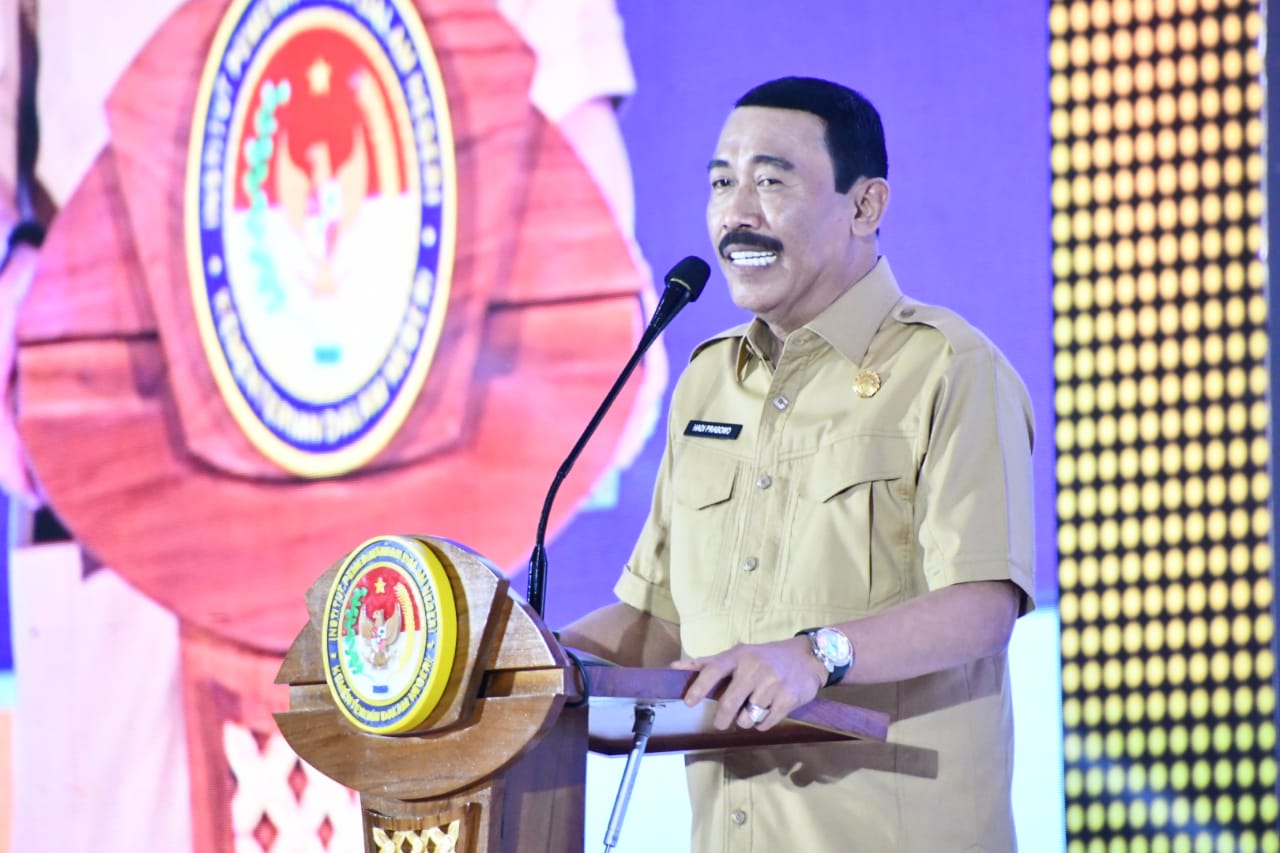
IPDN Chancellor, Dr. Hadi Prabowo, M.M again emphasized to the praja to really pay attention to the briefing given by the Head of BNPT as a guideline that must be understood, especially regarding ideologies or groups that support intolerance, radicalism and terrorism. "Radicalism begins with intolerance, then becomes extremist and develops into terrorism. This must of course be something we all must be wary of, especially now when it is always under the guise of religion," he said. Hadi also deeply regrets a group of individuals who always use the name of a particular religion as a cover or medium for radicalism and terrorism, "Don't use religion as a cover or medium for radicalism and terrorism. We must be able to choose religious preachers well, so that we can ward off radicalism. Intolerance, radicalism and terrorism are the enemies of the Indonesian nation, because this is very contrary to the basic ideology and consensus of the state, this is also the enemy of religion." According to him, Indonesian society and civil society in particular should not be complacent even though our understanding of radicalism is at 63.44%, but we still have to be alert to radicalism movements. "We, especially civil servants, must continue to strengthen national identity, because civil servants are the nation's front guard and are also expected to be the leading cadres in efforts to overcome terrorism, radicalism and intolerance," said Hadi.
Hadi also continues to remind all IPDN officers to cultivate a spirit of nationhood and nationalism, not to debate religious differences, master science and understand religion according to its guidance. "Don't be trapped by statements or thoughts that terrorism exists in one religion. Terrorism is the enemy of all religions. We must fight it together. We must be able to develop and maintain diversity with tolerance and non-violence and strengthen faith and devotion to God Almighty," he said.
IPDN students' enthusiasm for the material presented was quite high, as can be seen from the questions asked by both students who took part offline and online. Among them are related to what efforts can be made by the praja to educate the public so that they are not influenced by radicalism, what actions should be taken if they see radicalism on social media and so on. Responding to this question, Boy explained that civil servants must provide the best service to the community and continue to uphold the spirit of nationalism and love for the country.
Source: Kepala Bagian Kerja Sama dan Humas
La Ode Muhamad Alam Jaya, S.STP., M.Si
Back to News