The Minister for the Protection of Migrant Workers Optimizes the Role of the Civil Service as the Spearhead for the Protection of Indonesian Migrant Workers
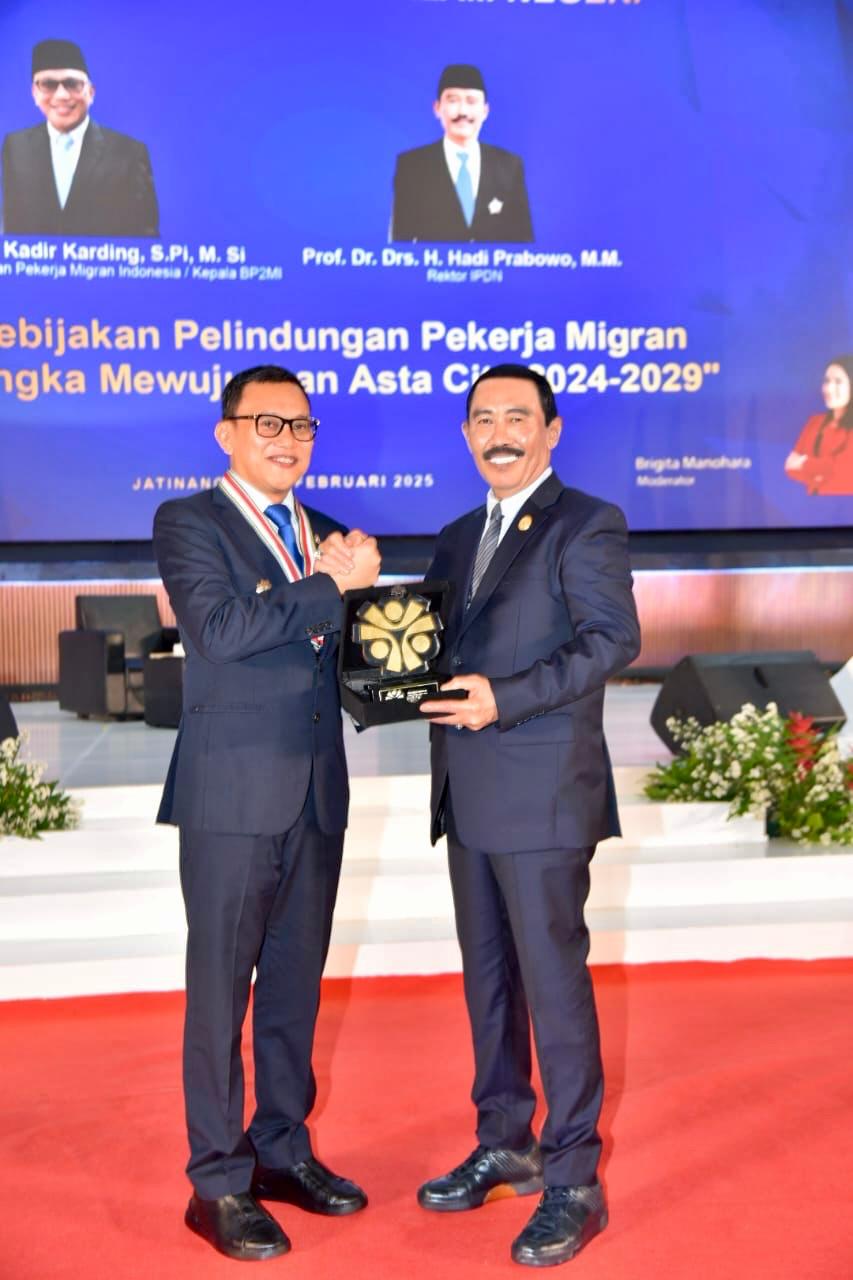
Jatinangor (26/02/2025), Minister for the Protection of Migrant Workers/Head of the Indonesian Migrant Worker Protection Agency (B2PMI), H. Abdul Kadir Karding., S.Pi., M.Si invited IPDN-Kemendagri officials to participate in changing the hashtag trend #EscapeAjaDulu to the hashtag #KerjaSajaDuludiOutside. According to him, the word escape has a negative definition, "Escape will not necessarily be as expected, especially if it is not balanced with good soft skills and skills. So it is better for us to change it to Just Work Abroad First. By working abroad there will be several benefits for our Human Resources, including the transfer of knowledge and transfer of skills," he said. This was conveyed by Abdul Kadir when giving material with the theme "Policy Direction for the Protection of Migrant Workers in the Context of Realizing Asta Cita 2024-2029" at the General Stadium/Public Lecture activity at the Balairung Rudini Building, IPDN Jatinangor Campus. He believes that IPDN is the main source of recruiting employees, especially in producing the best ASN in Indonesia. For this reason, he was present in front of 5,580 people consisting of civil servants, IPDN postgraduate students and representatives of the IPDN academic community in order to provide a new understanding regarding Indonesian Migrant Workers.
His presence at IPDN also aims to optimize the role of the civil service as the spearhead in protecting Indonesian migrant workers through activities, policy coordination and implementation, data collection and monitoring, outreach and education, problem prevention and handling, reintegration support, strengthening institutions at the regional level, monitoring and evaluation, collaboration with stakeholders, strengthening the economy of migrant workers' families, as well as advocacy and legal protection.
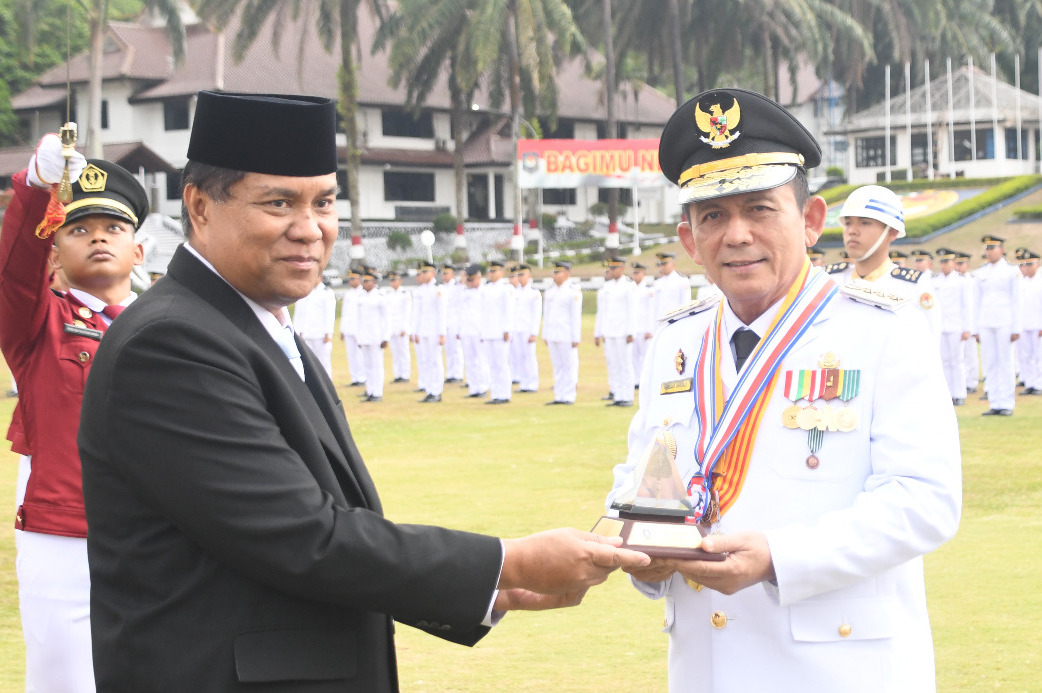
IPDN Chancellor Prof. Dr. Drs. H. Hadi Prabowo., M.M said that this activity could provide in-depth insight to civil servants regarding how the government is trying to provide comprehensive protection for Indonesian migrant workers, including policies related to empowerment, increasing skills and improving regulations that support their rights. According to him, Indonesia, as one of the countries with a large number of migrant workers, has a responsibility to ensure the welfare, protection and rights of migrant workers abroad, therefore understanding the direction of migrant worker protection policies is very important, especially for all of us who play an active role in the government system in the future. On this occasion, the Chancellor of IPDN also awarded the Kartika Astha Brata Utama award and Honorary Alumni of Civil Service Higher Education to Abdul Kadir for his dedication in empowering IPDN Alumni by placing them in several strategic positions in the Ministry for the Protection of Indonesian Migrant Workers/BP2MI.
In this activity, Abdul Kadir presented data that every year as many as 297,000 migrant workers are sent abroad. "From this data, 5.4 million migrant workers are workers who departed following procedures in accordance with applicable law or are said to be legal, while 4.3 million people (according to 2017 data) departed without procedures or were illegal," he said. So according to him, the total number of Indonesian migrant workers abroad this year could reach more than 10 million people. "This year, God willing, we will place 425,000 workers in 100 destination countries. This is a real contribution to reducing unemployment by 0.6% and also contributes to economic growth," he said.
He also highlighted the phenomenon of Indonesian migrant workers who experience a lot of violence, exploitation, and even human trafficking, "Those who get this case are dominated by illegal migrant workers. This happens because these non-procedural/illegal workers are workers who have low skills, poor command of foreign languages, weak mentality and don't know about the country's culture," he said. This understanding regarding migrant workers must be understood by IPDN officers who are ASN candidates for this country. According to him, the protection of migrant workers is in the Asta Cita of the President and Vice President of the Republic of Indonesia, namely related to strengthening the ideology of Pancasila, democracy and human rights, that every citizen has the right to work that is worthy of humanity, and everyone must have their human rights protected, including the right to work, not experience violence, not be exploited and so on. The second goal is related to strengthening the development of human resources, science, technology, education, health, sports achievements, gender equality as well as strengthening the role of women, youth and people with disabilities in the sense that all Indonesian migrant workers must be equipped with soft skills and abilities so that they can be useful and productive in other countries. Another goal is to build from the village and from below for economic equality and eradicating poverty.
Source: Kepala Bagian Hubungan Masyarakat
La Ode Muh. Alam Jaya., S.STP., M. Si
Back to News