Towards a Golden Indonesia 2045, Coordinating Minister for Political and Security Affairs Fuels the Spirit of Future Bureaucrats at IPDN
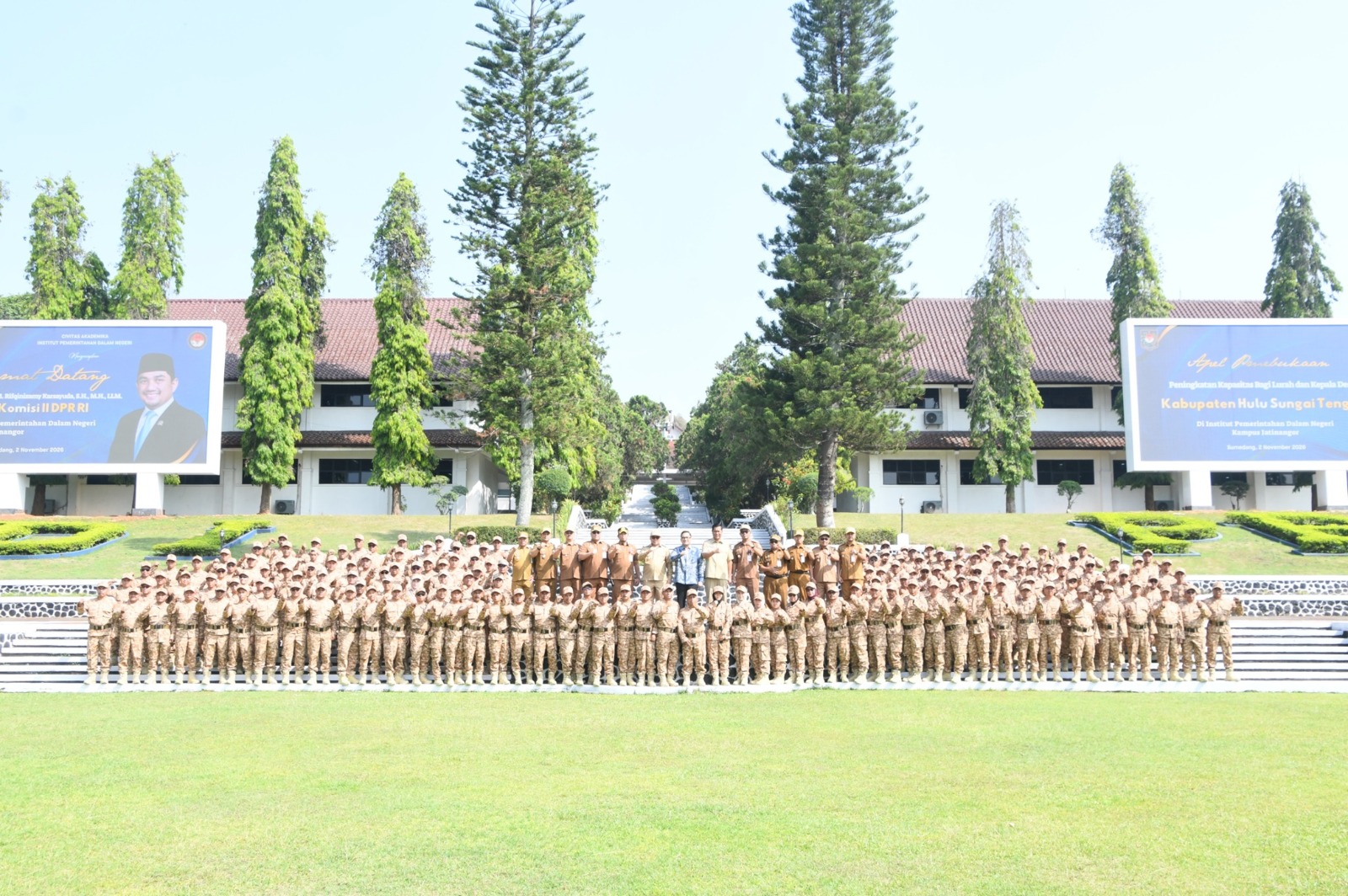
Jatinangor, 29 May 2026 - Welcoming the Golden Indonesia 2045, the Institute of Domestic Government held a public lecture on strategic leadership and national resilience with the crucial theme "Strategic Leadership Towards a Golden Indonesia 2045: The Role and Challenges of Bureaucrats in Government Institutions" by the Coordinating Minister for Political and Security Affairs of the Republic of Indonesia, Mr. General TNI (Ret.) Djamari Chaniago at the Balairung Rudini Building, IPDN Jatinangor Campus. The Coordinating Minister for Politics and Security was present accompanied by the Minister of Home Affairs, Mr. Police General (Ret.) Prof. Drs. H. Muhamad Tito Karnavian, M.A., Ph.D.
In his presentation, the Coordinating Minister for Politics and Security emphasized that strategic leadership is the main key for future bureaucrats to maintain political stability and strengthen national resilience. Bureaucrats play a strategic role in the midst of increasingly complex political dynamics, "Bureaucrats are implementers of public policy that connect the government with society, bureaucrats are also public servants, agents of change and problem solvers. These civil servants are being formed as candidate bureaucrats, the end of the central government which is directly in contact with society, so you must be able to carry out the role of these bureaucrats as well as possible," he said.
According to him, the government will be faced with challenges such as complexity and rapid change, community demands, weak regional fiscal capacity, large bureaucratic structures, digital transportation, transactional political pressure and abuse of authority. "You as prospective bureaucrats must be able to face this challenge, therefore IPDN must ensure that each graduate has good competence, is professional, adaptive, has integrity and is oriented towards public services and people's welfare," he said.
He also said that the more IPDN graduates who are placed in the regions, the better it will be for Indonesia, because then the greater the government's opportunity to capture the aspirations, desires and hopes of the community. "So in the future these civil servants will have to be more sensitive in capturing the anxieties and hopes of the community which will then be conveyed to the central government," he said again. According to him, the main function of IPDN is to produce ASN cadres or bureaucrats who are competent, have integrity, and never give up. "These IPDN officers are Indonesia's future leaders, so be leaders who are not only intelligent and capable but also honest, brave and loyal to the people. Be professional, modern and trusted ASN or government officials and loved by the Indonesian people," he said.
In his speech, the Minister of Home Affairs, Tito Karnavian, who was also present on this occasion, also emphasized to the IPDN officials about three important components related to building national resilience so that a country can survive for more than 300 years, namely having a strong military, a great government apparatus and having strong police/intelligence. "That's why IPDN trains and educates civil servants not only to become experts in government science but also to train their physical, mental, discipline and loyalty. This is to prepare future candidates for great government officials," he said. He also hopes that IPDN alumni can become agents of change wherever they are assigned. "IPDN alumni must be able to become the main movers of policy, glue and unifier of the nation and problem solvers in the environment where they will serve," he said again.
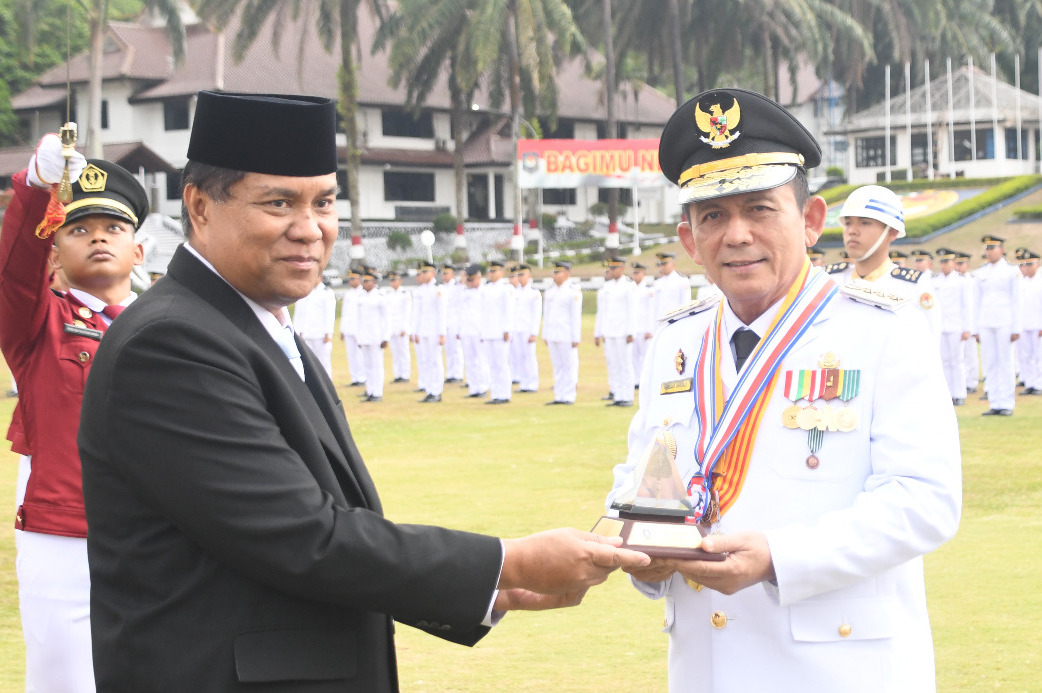
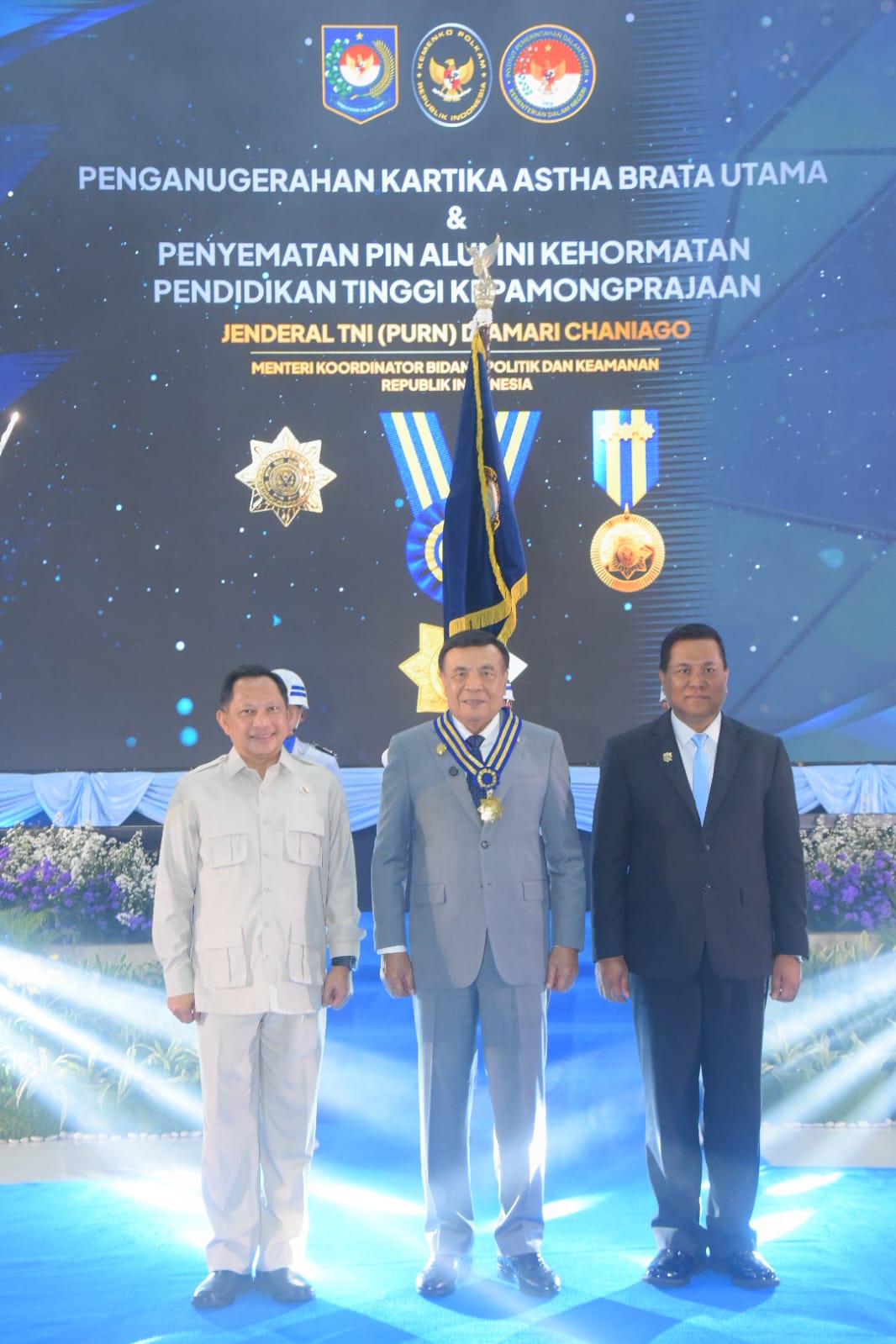
On this occasion, IPDN also awarded the Kartika Astha Brata Utama and the Honorary Alumni Award for Civil Service Higher Education to the Coordinating Minister for Political and Security Affairs. According to the Chancellor of IPDN, Dr. Halilul Khairi., M.Si. This award was given for the dedication and great contribution made by the Coordinating Minister for Political and Security Affairs to the progress of the nation, state and the development of civil service education. "This is a form of appreciation for his commitment which is considered very high in supporting the strengthening of the bureaucratic structuring of government institutions, as well as his attention to the future of civil service cadres as the backbone of public services at the regional and central levels," he said.
Source: Kepala Bagian Hubungan Masyarakat
La Ode Muhamad Alam Jaya., S.STP., M.Si
Back to News