
Towards a Golden Indonesia 2045, the main Praja printed IPDN will be a bridge for synergy between the Regional Government and Law Enforcement
Jatinangor (Thursday, 25 June 2026) - Towards a Golden Indonesia 2045, IPDN prints the main praja as a bridge for synergy between the Regional Government and Law Enforcement. This step was taken by the Chancellor of IPDN, Dr. Halilul Khairi., M.Si by directly inviting the Governor of Java Province (Barat, H. Dedi Mulyadi, S.H., M.M) and the Deputy Attorney General for Intelligence (Mr. Prof. With Integrity Towards a Golden Indonesia 2045”.
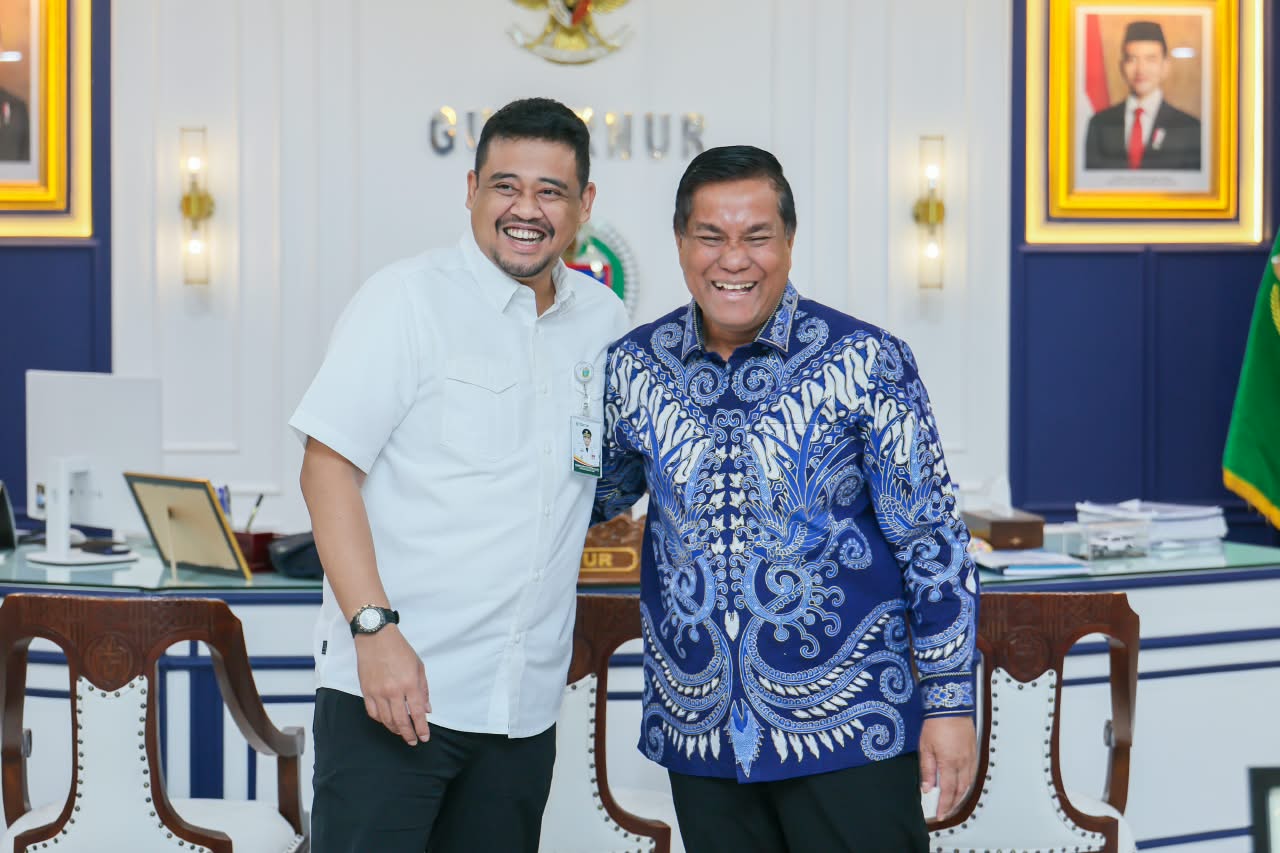
Kang Dedi, the familiar nickname of the Governor of West Java, provided an understanding regarding a new perspective on looking at the country. "A country based on a cultural perspective has 4 important components, namely land, air, water and sun, where these four components must become a unified whole," said Kang Dedi. According to him, the praja must restore its spirit of thought to two crucial dimensions, namely the universal mind which aims to restore the praja's frame of mind so that it is always based on the nation's philosophical, ideological and historical values, and the second thought, namely building a technocratic spirit. "This thinking encourages civil servants to not only become administrative bureaucrats, but visionary and applicable leaders," he said.
Kang Dedi also highlighted the real conditions of bureaucracy in the country. In the midst of big ambitions towards a Golden Indonesia 2045, the fact that "Indonesia is independent but not yet a rich country" is a hard slap and a big challenge for civil service candidates to change their government performance orientation. "Until now, government administration in Indonesia is considered to be still trapped in administrative satisfaction rather than achieving real impacts or public satisfaction (outcomes)," he said. According to him, the degradation of bureaucracy is reflected in the shift in the way we work in the digital era. Because work performance is measured based on the fulfillment of purely formal administrative aspects, the essence of performance which focuses on output, outcomes and direct benefits for the public, is now often replaced by superficial visual formalities such as simply documenting selfies and showing short videos on social media. As a future bureaucrat, according to Kang Dedi, praja must be able to move dynamically. "The bureaucracy of the future must be based on three main pillars, namely the taste of the past, the current administrative perspective and the vision of the future. The synergy of these three pillars can only be realized if the State Civil Service (ASN) dares to get out of its comfort zone, not be rigid," he said.
Meanwhile, the Deputy Attorney General for Intelligence (Mr. Prof. Dr. Reda Manthovani, SH., M.H., L.L.M) focused the praja on being more sensitive to the challenges that will be faced in achieving a Golden Indonesia in 2045. "Challenges such as global geopolitics, technological disruption, social polarization as well as corruption and abuse of power are challenges that must be faced at this time. For example, world geopolitical dynamics such as the rivalry between America and China, the Middle East conflict, the struggle for mineral strategies and so on. "It also has impacts on Indonesia, such as food inflation, poverty, unemployment, social conflict, digital disinformation and investment disruption," he said. According to him, the impact of geopolitics is the basis that this country needs an adaptive government, bureaucrats who have strategic leadership and the need for an early warning system. "As future leaders who will be directly involved in the region and be at the forefront. You must be a public servant who can make decisions, be a crisis manager, a builder of collaboration and a guardian of regional stability. As State Civil Apparatus in the region, civil servants must also be able to synergize with law enforcement officials. The key to this collaboration is communication, transparency, integrity, accountability and trust," he said.
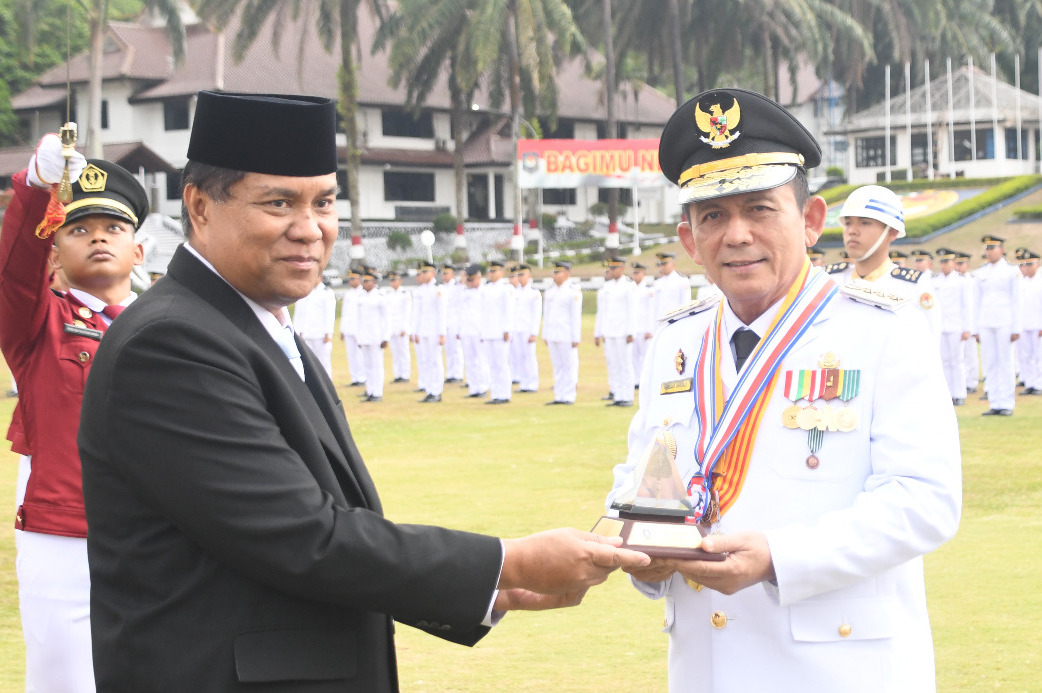
On this occasion, IPDN was also proud to award the 2026 Intermediate Civil Service Kartika Award and Honorary Alumni of Civil Service Higher Education in 2026 to these two speakers. According to the Chancellor of IPDN, this highest award was given as a form of appreciation and recognition for dedication, extraordinary contributions, and real commitment in supporting the progress of civil service and government governance in Indonesia. The Chancellor of IPDN said that giving this award was not just a ceremonial procession, but a symbol of the relay of the value of service to the younger generation. "Through this award, we want to provide a living role model to the Primary Praja. The presence of these award recipients proves that the synergy between strong leadership and legal compliance is the main key in developing the region," he said.
Source: Kepala Bagian Hubungan Masyarakat
La Ode Muhamad Alam Jaya., S.STP., M.Si
Back to News