IPDN PRAJA ASSIGNED TO MONITOR SIMULTANEOUS ELECTIONS DURING COLLEGE LEAVE
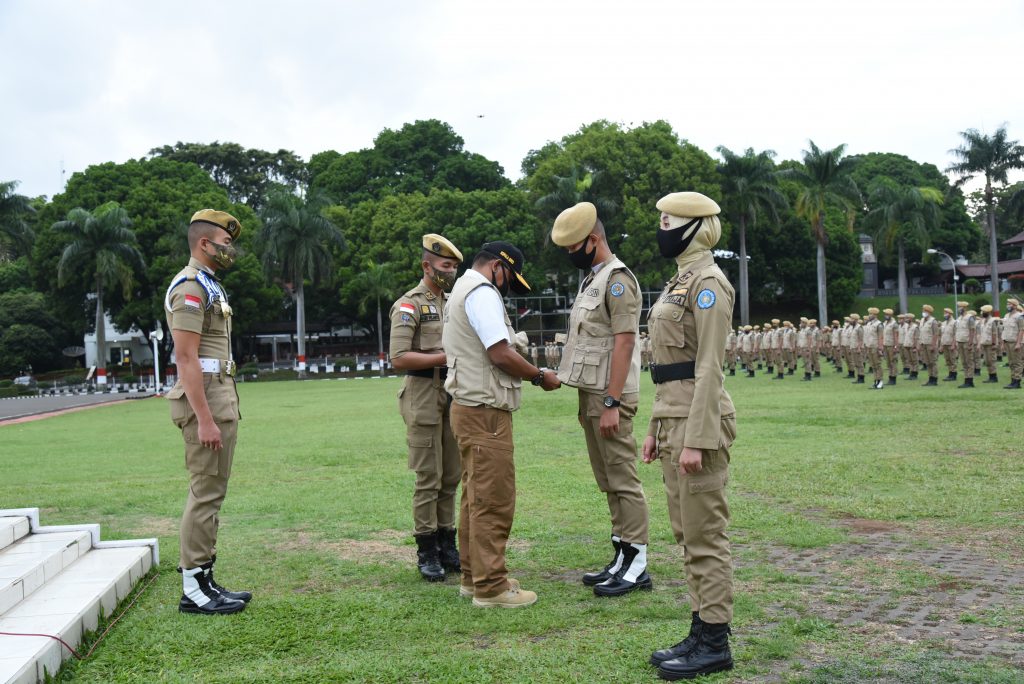
Jatinangor (05/12/2020) Chancellor of the Institute of Domestic Government (IPDN) Dr. Hadi Prabowo, M.M began to release 1,534 people from the main civil service unit to carry out study leave. All of these main prajas will be released to their respective regions, after previously carrying out the Covid-19 SWAB test in stages and obtaining negative test results. After the main praja, leave will gradually follow for the Nindya Praja, Madya Praja and Muda Praja units. During their leave period, specifically for the main civil service units, they were given additional academic duties to monitor the implementation of the Simultaneous Regional Election which is scheduled to be held on December 9 2020.
"All prajas will gradually be released to take leave from college, but before releasing leave, we will carry out swab tests for prajas first starting from 3 to 15 December 2020. If the results are negative, then they can go on leave in their respective areas. We will also carry out leave in stages to avoid crowds and of course by implementing very strict Covid-19 health protocols," said the Chancellor of IPDN. Regarding academic duties for the main praja, during their leave they were given the task of monitoring the implementation of the Pilkada by monitoring the implementation of voting and vote counting at the polling stations, the main IPDN praja was also assigned to distribute questionnaires related to the Pilkada to the public.
"As we all know, this year we are holding Simultaneous Pilkada with a different situation from previous years. This time we are holding Pilkada in the midst of the Covid-19 pandemic. Therefore, we (IPDN) through the main civil service unit have taken the initiative to help the government monitor the implementation of Pilkada in all regions, starting from the preparation, campaign, voting and counting stages. Whether all stages of implementing this Pilkada have been carried out in accordance with the procedures set by the Government or not, especially regarding the implementation of the Covid-19 health protocol," said IPDN Chancellor. The implementation of monitoring and academic studies carried out by IPDN officials regarding the implementation of the Pilkada was carried out to find out the stages of preparation for the Pilkada, starting from the Pilkada regulations which contain the availability of the budget, NPHD and its accessories, the determination of the DPT and the determination of candidate pairs for regional heads and deputy regional heads, including the distribution of Pilkada logistics to the TPS. The stage of campaign implementation that applies health protocols, namely related to the content of campaign materials related to handling Covid-19, props, campaign forms and community participation during the campaign. As well as the voting and vote counting stages which include setting the voting schedule and the level of public participation during voting and vote counting as well as the preliminary count results of the candidate pairs.
"To see the empirical situation and conditions as well as academic studies in the field, we assigned the main praja to go directly to the field. We assigned 862 main praja with an average of 3 (three) praja in 9 provinces, 37 cities and 224 regencies. Apart from monitoring, the praja will also distribute questionnaires which later in implementation will coordinate with the National Unity and Domestic Politics Agency for Provincial and Regency/City Regional Governments. Once collected, the questionnaire and all these documents will be submitted to "IPDN Regional Election Monitoring Secretariat," said the IPDN Chancellor.
Source: Kepala Bagian Kerja Sama dan Humas IPDN
Ervin Fahlevi, S.Sos., M.M
Back to News